Dreaming about more space, a little more privacy, or a home that feels removed from the rush without being too far from Columbus? Buying a rural or edge-of-town home near Elizabethtown can offer that balance, but it also comes with questions you may not face in a more built-up area. If you are considering this kind of move, it helps to know what to check before you fall in love with a property. Let’s dive in.
Why location means more than a town name
When you buy near Elizabethtown, your day-to-day experience often depends on the exact parcel, not just the mailing address. According to Indiana’s 2026 statewide roadway map, the broader Bartholomew County road network includes I-65, US-31, SR-46, SR-11, and SR-7, which can shape how easily you reach work, shopping, and other regular destinations.
That matters because two homes that both seem “near Elizabethtown” can have very different drive times. The route you actually use, the type of road frontage, and even the time of day can all affect your commute more than a simple map estimate.
Test the commute before you buy
If a home is on your short list, drive the route you would really use. Try it at the times you expect to leave for work, school drop-offs, or weekend errands.
This simple step can tell you more than an online map. A property may look close on paper, but a longer driveway, slower rural roads, or a less direct connection to major routes can change how convenient it feels.
Confirm who governs the property
One of the biggest rural-home mistakes is assuming every nearby property follows the same rules. Before you move forward, confirm whether the parcel is inside a town limit, under county jurisdiction, or subject to another local overlay through Bartholomew County forms and offices.
This is especially important for homes on the edge of town. A place may feel rural while still falling under formal county zoning and permit rules.
Understand rural residential zoning
Bartholomew County’s zoning ordinance includes a Rural Residential district for certain rural and agricultural parcels. The ordinance explains that these properties are intended to have public-road access and either public sewer and water or an adequate well-and-septic setup, as outlined in the county’s complete zoning document.
For you as a buyer, that means utilities and access are not side issues. They are part of how the property functions and how future improvements may be reviewed.
Check water service early
One of your first questions should be whether the home is on public water or a private well. Eastern Bartholomew Water Corporation serves northern, eastern, and southern Bartholomew County, along with parts of nearby counties, so some homes near Elizabethtown may have access to public service.
If public water is available, ask where the meter is located and whether there are any line-extension costs or service questions tied to the property. If the home uses a private well, your due diligence should go a step further.
Know your well responsibilities
If a property has a private well, the homeowner is responsible for testing and maintenance. The Indiana Department of Health recommends annual well-water testing for bacteria and nitrate, plus fluoride, arsenic, lead, and copper at least every five years or whenever major maintenance has been done.
That guidance matters because private wells are not regulated like public utility water under the Safe Drinking Water Act. In practical terms, you should ask for recent test results and find out when the well was last serviced.
You should also look at accessibility. Indiana’s private well standards say a well should be accessible for servicing and should not be located inside a building or basement except in a dedicated well house.
Septic systems deserve close attention
For rural and edge-of-town homes, septic questions should come up early, not after inspections begin. The Bartholomew County Health Department performs home-loan inspections related to well water and septic transfers, which makes this a key part of your transaction planning.
The EPA recommends that septic systems be inspected every one to three years and pumped every three to five years. In its septic care guidance, the EPA also advises owners to keep vehicles off the drainfield and maintain records for service and repairs.
When you tour a property, ask:
- When was the tank last pumped?
- Where is the drainfield located?
- Are there maintenance or repair records available?
- Has the system had any recent inspections?
Verify internet by address
Broadband is a major quality-of-life issue for many buyers, especially if you work from home, stream often, or rely on smart-home devices. In rural areas, service can vary from one address to the next.
Indiana’s broadband map resources and the FCC’s National Broadband Map help page can help you check availability, technology types, and advertised speeds. The FCC notes that the map reflects reported availability, not actual performance or affordability, so it is smart to confirm serviceability at the exact address.
Driveway access is more than convenience
On a rural property, driveway access can affect both usability and approvals. Bartholomew County states that driveway approval is required before building a residence, commercial building, or outbuilding that accesses a county road.
That means access is not just about whether the driveway looks workable today. It can also affect what you may be able to build or change later.
If the home has a long drive, shared entrance, or unusual road approach, ask whether the access was formally approved and whether any future changes would require additional review.
Outbuildings and improvements may need permits
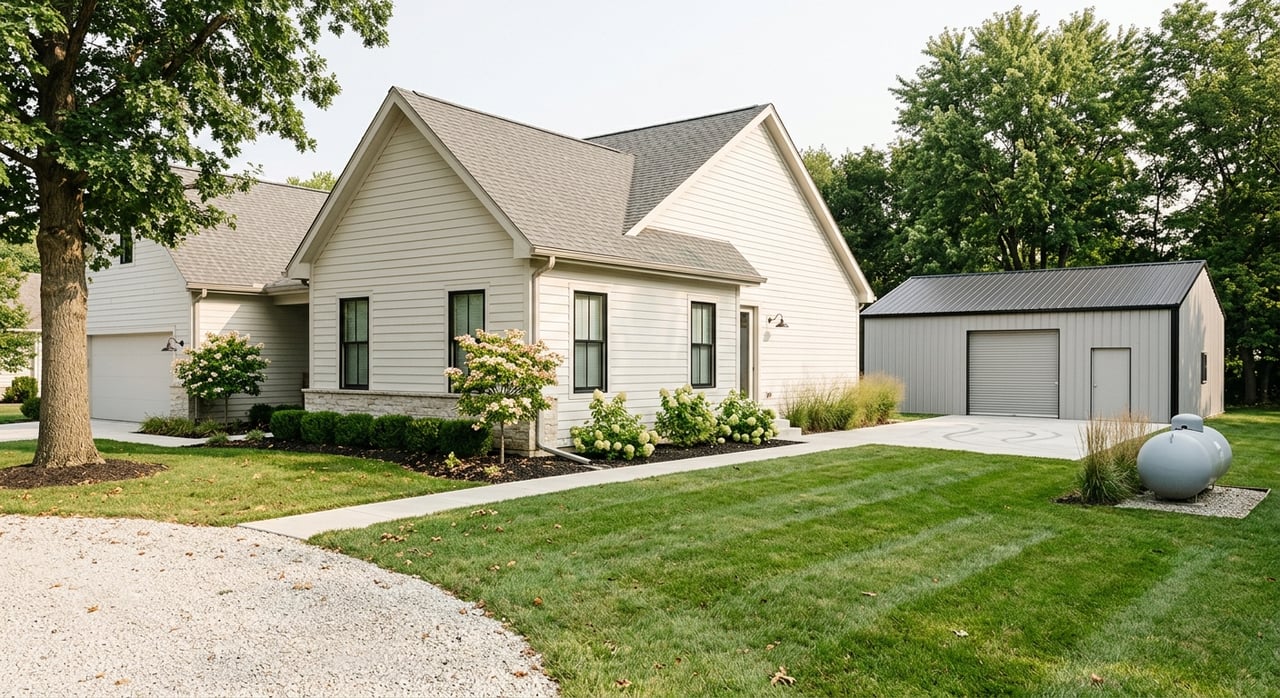
A barn, detached garage, shed, or workshop can be a big reason buyers choose edge-of-town living. But before you assume you can add or modify structures later, check the permit rules.
Bartholomew County code enforcement says permits are required for many improvements, including sheds, storage buildings, and attached or detached garages. The county also says a permit is needed before construction, alteration, or repair of any building or structure costing more than $300.
There is also a survey-related detail to know. On lots under two acres, new accessory buildings larger than 200 square feet require a site plan certified by a registered land surveyor.
Why surveys and records matter
Rural and edge-of-town properties can have more moving parts than a standard subdivision lot. Easements, septic-field locations, setbacks, utility connections, drainage features, and flood-hazard information may all be part of an improvement-location-permit review under the county’s zoning materials.
Bartholomew County also notes that deed and plat records can be searched through county resources, and a private surveyor may be needed to verify corners. If you want to research available records, the county’s property search and records page is a useful starting point.
The county surveyor’s office also maintains regulated drains, section corners, and GIS mapping through the surveyor office resources. For buyers, that can be helpful when a property has drainage questions or boundary uncertainty.
Call before you dig
If you plan to add fencing, install utilities, expand a driveway, or do any future excavation, Indiana law requires contacting Indiana 811 at least two full working days before digging.
This may sound like a post-closing issue, but it is worth knowing in advance if you are buying a property with improvement plans already in mind. Rural homes often come with more opportunities for future projects, which also means more need for careful planning.
Financing questions to ask early
If you are exploring financing for a rural or edge-of-town home, USDA financing may come up in the conversation. The USDA Section 502 Guaranteed Loan Program works through approved lenders, has no set acreage limits, and may finance a site with a new or existing dwelling plus items such as grading, walks, fences, and driveways.
For buyers near Elizabethtown, the most useful lender questions are often very specific. Ask whether the property is eligible by address, whether the current well-and-septic setup fits program guidelines, and whether outbuildings, driveway access, or recorded access issues may need to be cleared before underwriting.
Your rural home checklist
Before you make an offer on a home near Elizabethtown, try to get answers to these practical questions:
- Is the property on public water or a private well?
- If it has a private well, when were the last bacteria and nitrate tests done?
- If it has septic, when was it last pumped and where is the drainfield?
- Is high-speed internet actually available at the address?
- Is the driveway already approved for county-road access?
- Are there permits or site-plan requirements for future outbuildings?
- Are there recorded easements, plats, or survey documents on file?
- Does the lender need a survey, septic release, or driveway approval before closing?
A smart approach pays off
Buying a rural or edge-of-town home near Elizabethtown can be a great fit if you want space and flexibility while staying connected to the Columbus area. The key is knowing that these properties often need a little more upfront homework, especially around utilities, access, records, and financing.
When you ask the right questions early, you can move forward with more confidence and fewer surprises. If you are thinking about buying near Elizabethtown and want practical local guidance, Kelly Sullivan can help you evaluate properties, narrow your options, and make a smart move with clarity.
FAQs
What should you verify before buying a rural home near Elizabethtown?
- You should verify water source, septic details, driveway access, internet availability, zoning, permits, and any recorded surveys or easements tied to the parcel.
How do private well rules affect rural home buyers in Bartholomew County?
- If a home has a private well, you are responsible for ongoing testing and maintenance, and you should ask for recent bacteria and nitrate test results plus service history.
Why does driveway approval matter for an edge-of-town property near Elizabethtown?
- Bartholomew County requires driveway approval for buildings accessing a county road, so approved access can affect both current use and future improvements.
How can you check broadband for a home near Elizabethtown?
- You can review Indiana broadband resources and the FCC National Broadband Map by address, then confirm actual serviceability with providers because map data may not reflect real-world performance.
What financing questions should you ask for a rural property near Elizabethtown?
- Ask your lender whether the property is eligible by address, whether the well and septic setup meet loan guidelines, and whether a survey, septic release, or access documentation will be needed before closing.